 East London News A Force for the community…
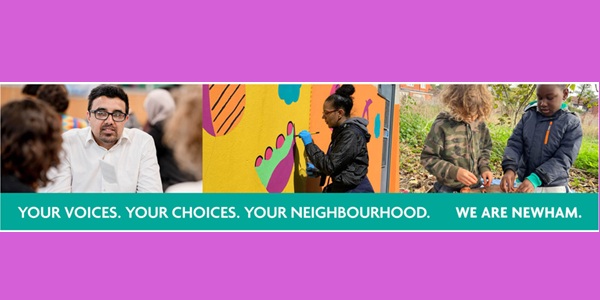
NEWHAM COUNCIL has announced the 130 community projects that will be funded as part of its “People Powered Places” (PPP) initiative. PPP sees residents decide how planning gain money will be spent – but is that a good idea?
When developers build or regenerate something, they have to pay the Local Authority money to put in new infrastructure to support the new development. If, for example, a developer builds a new housing estate with more homes than there used to be there, the developer will pay for road improvements, an open space or two, a bigger community hall – and maybe even a GP surgery or a new school.
What the developer pays is known as the Community Infrastructure Levy (CIL). Usually councillors plan the spending, but there is a different process in Newham – at least for some of the CIL. First there was “The Big Vote”: over 11,000 people voted to decide which projects would receive funding. That’s 11,000 out of a population of around 350,000, or 3%. That’s less than one tenth of the people who voted in the council elections in May: not so much a “Big Vote” and more of a “Teeny Weeny Vote”, then.
The projects that received the most votes included 66 resident-led projects and 33 youth-led projects (it is not clear if there is any overlap here). Alongside the CIL funding, some £80,000 from the Royal Docks Team (whoever they are) was thrown into the pot to support projects in the Royal Docks and Custom House & Canning Town.
The Mayor of Newham, Forhad Hussain, explained what was going on. “We’re committed to giving local people a real say in shaping the borough, empowering residents to make positive changes – because they know their neighbourhoods best,” he said. “It’s fantastic to see thousands of people taking part in the Big Vote, and I’m especially proud to see more youth-led projects coming forward, ensuring young people are helping to lead positive change in the places they live. We want residents to feel listened to, involved and empowered, and with continued Council support, we will keep backing community-led action that makes a real difference across the borough.”
These are admirable aspirations. However, schemes designed in the Town Hall don’t always work live up to expectations out in the real world – for two main reasons.
First, not everyone has the same opportunity to join in the vote. It will be those with most time on their hands and who are most articulate –- and their needs may not be representative of the whole population.
Second, the borough has just elected a new set of councillors, who will know their wards quite well at this point. They will be in touch with the vocal voters, but also with the less vocal ones who may have more desperate needs. The body of councillors should be better to speak up for all residents, because they can be impartial.
If residents don’t like what the councillors are doing, they can vote them out in four years time – which should be a good lever on the councillors to act in everyone’s best interests now. If a group of residents organise to get support for their pet projects, other residents cannot hold them accountable. Ironically, groups of residents who participate in projects like this will often be encouraged and supported by one of their councillors – on the quiet! Representative democracy can be far fairer than participatory democracy.
Does that sound fanciful? It did happen in another East London borough some years ago. The Council had a similar voting exercise to spend a modest sum in each local area. It resulted in an undignified mobilisation of residents backing each of the two main proposals – and a vote out. It was probably more argumentative than the average Council meeting, and it took around a decade for the community to put that division behind them.
These resident voting exercises can be a good fig leaf for a council that is trying to tick boxes. They are almost always votes on peripheral issues. Councils seldom ask residents to vote on rent levels or charges for Adult Social Care.
An alternative would be for councillors to organise regular local debates where everyone can have an input – and then take objective decisions. That would help councillors stay in touch with residents over a much wider range of issues.
●Find out more about PPP:
PPP
●Read more about it:
Labour loses its majority on Newham Council
Labour hangs on to Mayoralty in Newham