 East London News A Force for the community…
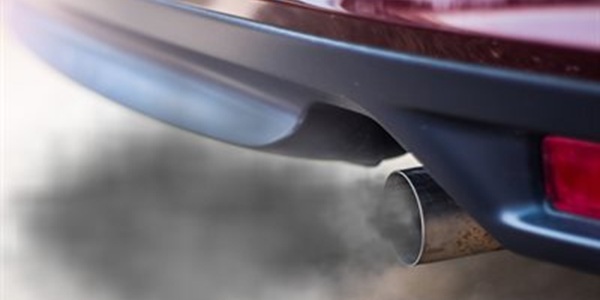
TOWER HAMLETS Council has claimed the credit for a cut in air pollution since 2019. This comes at the same time as academic research has shown that London ULEZ has led to a huge improvement in children’s lung capacity.
Tower Hamlets Council is claiming that nitrogen dioxide pollution (which is mainly caused by car exhaust fumes and is measured by local monitoring stations) has reduced by 37.6% since 2019.
How has the Council done this?
The Council has run an “integrated anti-idling programme, combining education, engagement and enforcement to encourage lasting behavioural change”. In other words, it has cut the number of drivers who sit in their cars with the engines running. Their campaign has consisted of:
•installing 400 anti-idling signs
•running 223 targeted enforcement patrols
•engagement with over 800 drivers
•delivering workshops in schools to 239 pupils
•a social media campaign reaching out to 239 school pupils.
The Council did a survey of residents (number unknown) which concluded that 70% of them had reconsidered their engine-idling behaviour and these residents had contributed to a 19-27% reduction in nitrogen dioxide levels at two schools.
Believing that the anti-idling campaign had such a big effect is quite a big ask. First you have to believe that idling engines were such a large component of the borough’s air pollution that a modest intervention cut overall pollution by a third. Second, you have to believe that the said modest intervention had a massive – disproportionate – result.
There is a huge volume of traffic passing through the borough’s three major east-west routes for most of the 24 hours in a day. Much of it is idling, because it travels so very slowly. The majority of idlers are probably not drivers leaving their engines running while they are parked – they are probably drivers in the road, travelling, trying to get through Tower Hamlets.
The anti-idling work has been supported by the Council installing 1,250 Electric Vehicle Charging Points to encourage local residents to buy electric cars; changing the council’s own vehicles to ones which run on electricity or biofuel; and planting 2,198 trees.
Has ULEZ contributed?
In 2019, Mayor of London Sadiq Khan, introduced the Ultra Low Emission Zone (ULEZ) which made drivers of older cars, which cause more pollution, pay a fee to drive into London. A recent study by researchers at Queen Mary, University of London, found that over the last five years children’s lung size and capacity have improved so much that they are roughly equal to that of children in the control area, Luton. Researchers attribute this in large part to reduced pollution and cleaner air across London.
If the ULEZ has made such a difference across London, on what basis is Tower Hamlets Council claiming that its anti-idling campaign can take much of the credit for the local improvement? What would be interesting would be to look at the figures for air pollution during the Covid lockdowns and compare these with current levels: then we could see the effect of reducing the volume of traffic on the pollution level – and compare it with today and the anti-idling campaign.
What does the Cabinet Member think?
Councillor Shafi Ahmed, Cabinet Member for a Clean and Green Borough (one of the more rational job titles on the current Cabinet), seems to support the Council’s line – though he is perhaps over-estimating the volume and reach of the Council’s campaign.
“Air pollution affects not only people’s health but also our local environment and wildlife. Tackling it requires a collective effort, and we are proud of the progress we have made together,” he said. “I am delighted to see our integrated approach of education, engagement and enforcement delivering such positive results. This achievement reflects the hard work of our officers and the support of residents who have embraced the campaign.
“While there is more to do, these results demonstrate that our actions are making a real difference. We will continue working with communities, schools and businesses to keep pollution levels low and help create a cleaner, greener borough for everyone.”
We can all look forward to seeing what improvements “more of the same” will bring.
●Read more about it:
Young people lead discussion on air quality
Sadiq “Fish Island Vandal” Khan funds air quality products